
Beyond the Needles: Bridging Eastern and Western Medicine for Healing
- Jan 15
- 4 min read
Updated: Mar 4

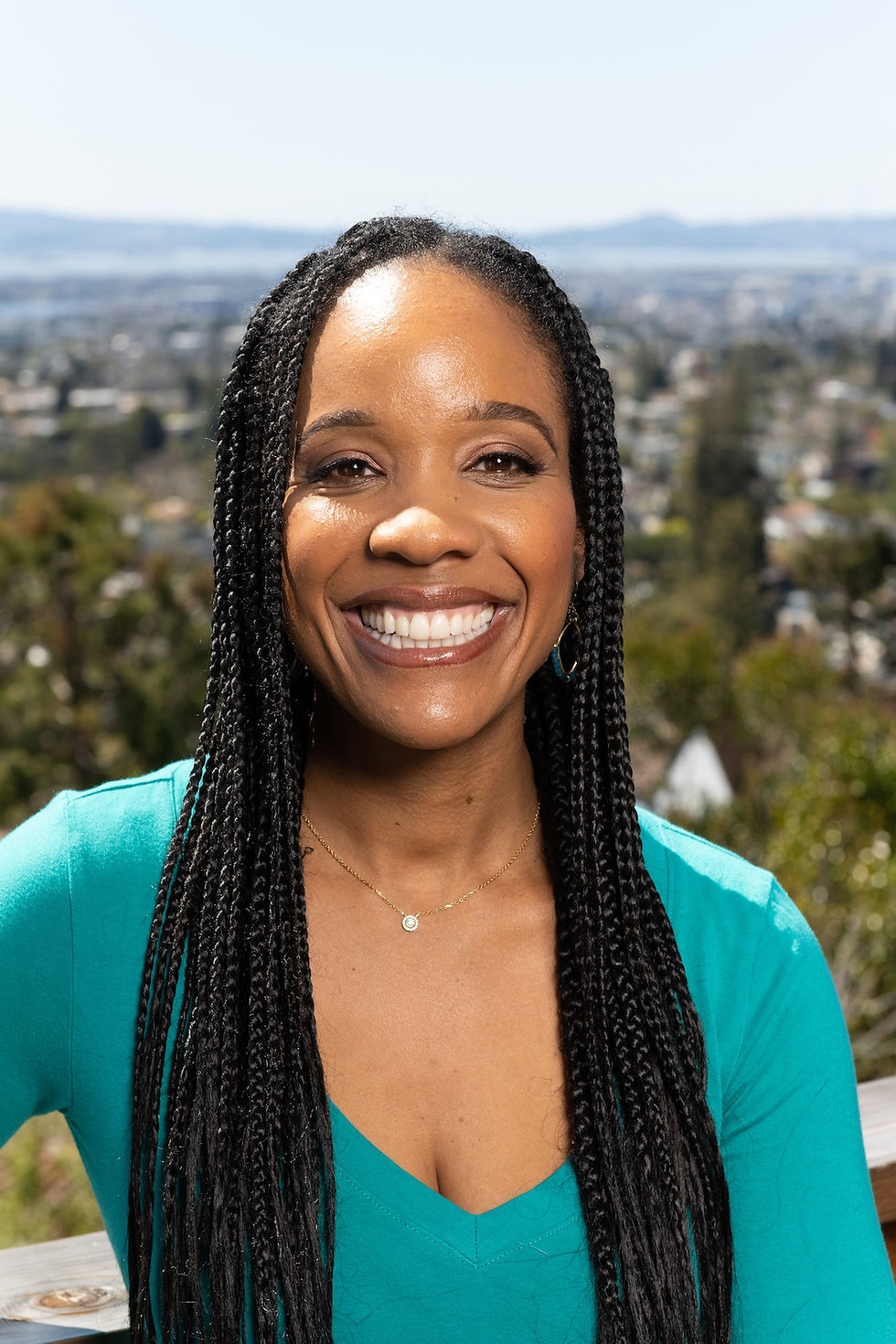
What happens when a conventionally trained anesthesiologist discovers the profound healing potential of Chinese medicine? In our newest episode of Love Letters to Our Bodies, I sat down with Dr. Crystal Terry, who has spent 34 years serving the East Bay community—first as Chief of Anesthesia at Alameda Hospital, and later as a physician who courageously integrated acupuncture into her pain management practice. This conversation opened unexpected doors into understanding how our bodies heal, how pain works (and why we sometimes can't see it), and why the integration of Eastern and Western medicine isn't just complementary—it's essential.
The Mystery of Consciousness and Sleep
Dr. Terry offered a fascinating window into what happens during anesthesia: the controlled interruption of neurotransmitters that allows neurons to stop communicating, creating a state where "we cease to have thought" while the body continues its essential functions. As someone deeply interested in consciousness work, I found this clinical definition surprisingly resonant with contemplative understandings of awareness.

But what struck me most was Dr. Terry's insight about healing: "Sleep is the new gold." She explained that all of the body's healing powers come forward during deep sleep—a reminder that our most profound medicine might be as simple (and as challenging) as good rest.
When Western Medicine Hits a Wall
Raised by a physician father who taught her to think linearly—"Problem A has solution B"—Dr. Terry initially approached medicine with the confidence of deductive reasoning. But chronic pain conditions, inflammatory disorders, and the complex aftermath of cancer treatments revealed something important: Western medicine, for all its surgical brilliance and pharmaceutical precision, runs into brick walls.
"We are better at treating some cancers. We're terrible at treating others," she acknowledged honestly. "And the process of treatment is often more debilitating than we would like it to be."
This is where acupuncture entered her practice—not as a replacement, but as what she calls "the gentle realignment of the body's balancing." Where Western interventions can be "overwhelming" to the body's systems, Chinese medicine offers subtle, repetitive guidance for a system that is naturally seeking equilibrium.
The Body Remembers What We Cannot See
One of the most powerful insights from our conversation was about pain itself: it cannot be seen. Dr. Terry can only know you're experiencing pain if you report it, demonstrate it, describe its quality and location. This invisibility is why pain management requires such careful listening—and why having a healing relationship matters as much as the treatment itself.
She shared her own experience receiving acupuncture during her busiest working years: "I would go and lay on the table, and the needles would be placed, and it would be warm and a little bit dark. The next thing I knew, I felt like I was being transported to another world... When I came back, I was dazed and confused. What just happened?"
This speaks to something I know many of you have experienced—those moments when healing touch, whether through acupuncture, Reiki, or other modalities, takes us somewhere beyond our ordinary awareness, where the body's own wisdom can do its work.
For Women Navigating Cancer Treatment
Dr. Terry was clear: if she had cancer and were being treated, she would "absolutely include Chinese medicine." Why? Because cancer treatments—surgery, chemotherapy, radiation—throw the body dramatically out of balance, creating nausea, fatigue, anxiety, and a host of other challenges that Western medicine often treats as secondary concerns.
"The person is having a life during treatment, not just after treatment," she emphasized. This is precisely what we address in our Love Letters to Our Bodies workshops—the wholeness of the journey, not just the destination of being "cancer-free."
She encouraged women to advocate for integrative approaches with their oncology teams, and shared hopeful news: more hospitals are now hiring acupuncturists as staff members, making referrals easier than ever before.
Breaking Down Barriers
For those who carry fear about needles after extensive medical treatments, Dr. Terry offered gentle reassurance. Acupuncture needles are solid (not hollow like injection needles), extremely thin, and they separate tissue rather than cutting it. The sensation is more like therapeutic stimulation—similar to acupressure or deep tissue massage accessing points on the body where healing can be activated.
She also taught us a practical tool: if you're experiencing nausea or anxiety, try massaging the web space between your thumb and first finger. "Your focus will go away from your anxiety," she explained. These are self-care techniques we can learn and carry with us.
A Message of Hope
When I asked what message she would offer women who feel they've tried everything for their pain, Dr. Terry's response was immediate and clear: "Don't give up."
New treatments emerge constantly. The brain—or as she beautifully reframed it, "the spirit"—is resilient and continues to seek solutions. "You may think you have done everything, but there's more."
Listen to the Full Episode
This conversation ranged from the biochemistry of consciousness to the philosophical understanding of illness as an "invited guest," from inflammation as both friend and foe to the importance of bringing a companion to medical appointments who can help you advocate for what you need.
Dr. Terry reminded us that healing happens in relationship—with practitioners, with our own bodies, and with modalities that honor both the precision of Western science and the wisdom of ancient traditions.
I'm grateful to Dr. Terry for her thoughtfulness, her decades of service, and her willingness to bridge worlds that too often remain separate. Her work on the Charlotte Maxwell Clinic Board of Directors ensures that low-income women have access to these integrative therapies—a beautiful expression of health equity in action.
Listen now to discover how Eastern and Western medicine can work together to support your healing journey, and why the most important intervention might be happening while you sleep.
Related Article: Acupuncture and the Five Elements for Life
Love Letters to Our Bodies is available on Apple Podcasts, Spotify and most other podcast platforms. Share this episode with someone who might benefit from an integrated approach to pain management and healing. Special thanks to Dr. Crystal Terry for her generous wisdom and to the Charlotte Maxwell Clinic for their vital work in our community.


Comments