
When the Church Becomes a Site of Healing: Faith, Community, and Black Women’s Cancer Care
- Jul 9
- 3 min read
A conversation with UCSF’s Michelle Moseley and faith health advocate Marion Harris on closing the gaps that medicine alone cannot fill.

There is a question that sits at the heart of Moyo Institute’s work: What does it look like to care for the whole person — not just the disease, but the grief, the faith, the community, the body that has been through so much?
Episode 39 of Love Letters to Our Bodies takes that question into one of the most powerful and underutilized spaces in African American life: the church.
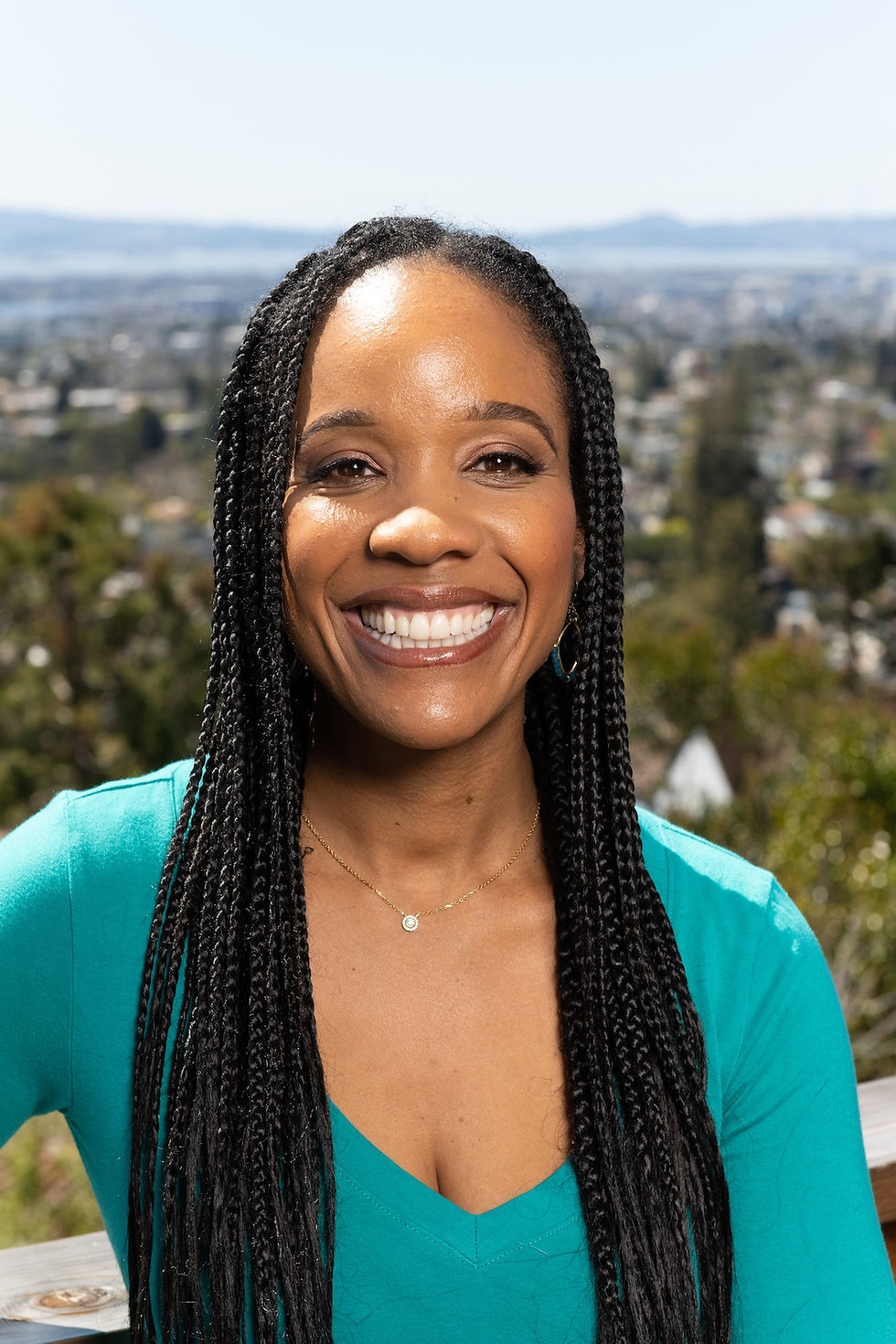
Gwendolyn Mitchell is joined by Michelle Moseley, Program Manager of Health Education and Community Outreach at UCSF’s Helen Diller Family Comprehensive Cancer Center, and Marion Harris, RN, BSN, MSN, M.Ed, FCN — a nurse, educator, and breast cancer survivor whose first diagnosis came in her late 20s and set her on a decades-long path of faith-based health advocacy.
Together, they trace a vision of what becomes possible when healthcare institutions and faith communities stop operating in parallel and start working in concert.

“This work is a product of my life. I’m a breast cancer survivor, having had my first diagnosis in my late 20s.” — Marion Harris
Healing Is Not the Same as Curing
One of the most clarifying moments in the conversation comes when Marion draws a distinction that the healthcare system rarely makes explicit. Healing, she says, doesn’t always mean the disease disappears. It can be “threefold: mind, body, and spirit.”
This framing — healing as wholeness rather than cure — is foundational to both Moyo’s workshop model and to the faith-based health ministry work Marion has built over nearly two decades. It’s also where churches, at their best, have something medicine cannot fully offer: a community that holds people through the long arc of illness, survivorship, and grief.
Health Equity and the Broken System
Michelle Moseley doesn’t soften the reality. Black people face the highest death rates for many of the most common cancers — breast, prostate, lung, colorectal — and early detection screenings exist for all of them. The gap between what’s possible and what Black communities actually access is not a failure of individual behavior. It’s a failure of systems.
“There are many things against us. There are also many people and resources that can help get us through.” — Michelle Moseley
That both/and is important. Naming the inequity without offering a path forward leaves people stranded. Michelle’s work at UCSF’s Office of Community Engagement is built on the belief that long-term, trust-based relationships — not one-time outreach — are what actually shift outcomes.
Meeting People Where They Are
Throughout the conversation, one phrase keeps returning as a kind of north star: meet people where they are. For Marion, this is the animating principle of faith-based health ministry — honoring the person, not the protocol. For Michelle, it shapes how UCSF approaches outreach: showing up in the spaces communities already trust, including sanctuaries, fellowship halls, and health fairs organized by the Faith & Health Communities Committee.
This is the work. Not parachuting in with a pamphlet, but building the kind of relationship where a church nurse knows her congregation’s health history, where a pastor knows to refer a member to UCSF’s community resources, where a woman sitting in the pew on Sunday knows she doesn’t have to navigate her cancer journey alone.
Episode 39 of Love Letters to Our Bodies is available now wherever you listen to podcasts.
For more information about UCSF’s faith-based cancer education resources, visit cancer.ucsf.edu/community-engagement. To learn more about Moyo Institute and the Love Letters to Our Bodies workshops, visit moyoinstitute.org.


Comments